

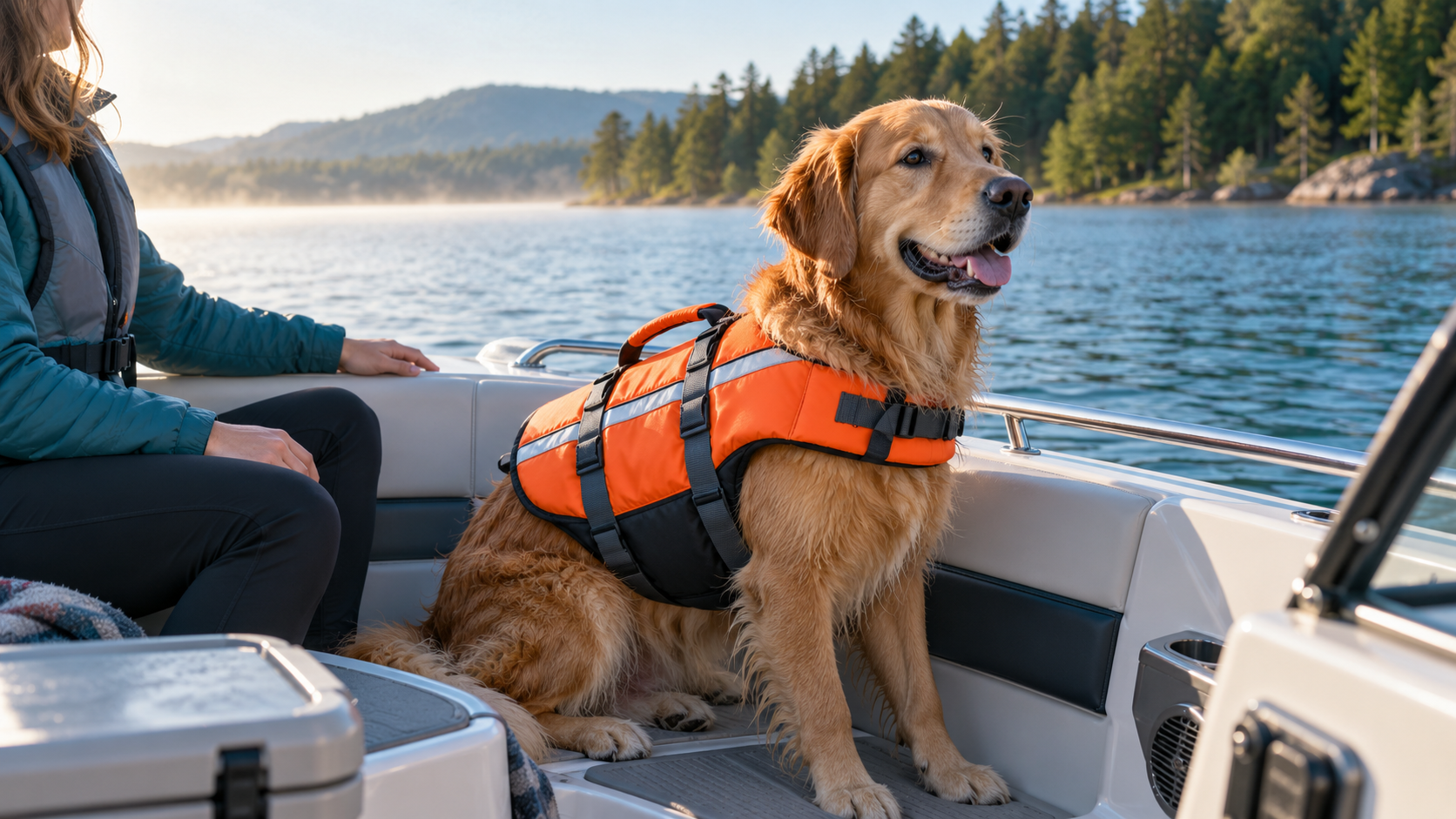
A dog should wear a properly fitted life jacket whenever they are aboard a boat, kayak, canoe or paddleboard, even if they are a confident swimmer. A calm day can change quickly. An unexpected wake, a slippery deck or an awkward launch may put a dog in the water before they understand what has happened. The right flotation gives them valuable support, makes them easier to see and gives you a safer way to guide them back to the craft.
This guide explains how to choose a dog life jacket for boating, prepare your dog before launch and build a practical safety routine for days on the water. A life jacket is an important backup, but it never replaces close supervision, sensible weather decisions or a recovery plan.
Why does a good swimmer need a life jacket on a boat?
Swimming ability matters, but boating creates risks that a pool does not. A dog that swims comfortably near shore may still become frightened or disoriented after falling from a moving craft. Wind, current, waves, cold water and distance from a safe exit all increase the effort needed to stay afloat.
A dog life jacket can help in several ways:
- It supports buoyancy when a dog is tired. Even athletic dogs can fatigue after repeated swimming or an unexpected fall.
- It improves visibility. Bright fabric and reflective details make a dog easier to locate beside a boat or in choppy water.
- It provides a controlled point of assistance. A well-positioned top handle helps you guide a dog toward a platform, ladder or shoreline.
- It can help a dog maintain a more stable swimming position. Balanced flotation is particularly useful for puppies, senior dogs, short-nosed breeds and dogs with stocky bodies or limited stamina.
The American Kennel Club recommends a life jacket even for strong canine swimmers when boating or kayaking. The reason is simple: flotation is most useful when something unexpected happens, not only when a dog plans to swim.
What to look for in a dog life jacket for boating
The best dog life jacket for boating is not necessarily the bulkiest one. It should combine secure flotation with comfortable movement, a reliable handle and a fit that remains stable when wet.
Balanced flotation and useful coverage
Flotation panels should support the torso without forcing the dog into a stiff position. Coverage through the chest and body can provide stability, but the jacket should not press into the shoulders or interfere with a natural swimming stroke. If your dog tends to hold their head low, a style with additional front or chin support may be helpful.
A strong, well-positioned rescue handle
A top handle lets you steady a dog beside the craft and assist during reboarding. Check that it is securely attached to the jacket rather than stitched only to a thin outer layer. The handle is an aid, not a crane: for a large or heavy dog, support the chest and hindquarters rather than suspending the dog by the handle alone.
Secure adjustment at the neck and torso
Choose a jacket with adjustable neck and belly or chest straps. Once fastened, you should generally be able to slide two fingers beneath the straps. The fit needs to be snug enough that the jacket cannot rotate or allow a front leg to slip through, but not so tight that breathing or shoulder movement is restricted.
Chest girth is normally the most useful starting measurement. Weight and breed can help, but dogs of the same weight may have very different body shapes. Use our dog life jacket size guide for step-by-step measuring and wet-fit checks, and compare your measurements with the size chart on the product page before ordering.
Visibility, durability and comfort
Bright colours and reflective details are practical on open water. Also look for smooth edges around the neck and forelegs, quick-drying material and straps that stay secure after repeated wetting. Before each trip, inspect the jacket for loose stitching, damaged buckles or compressed flotation panels.
Prepare your dog before launch day
The dock is not the best place for a first introduction. Let your dog explore the life jacket and the watercraft in a quiet setting where there is no engine noise, movement or pressure to board.
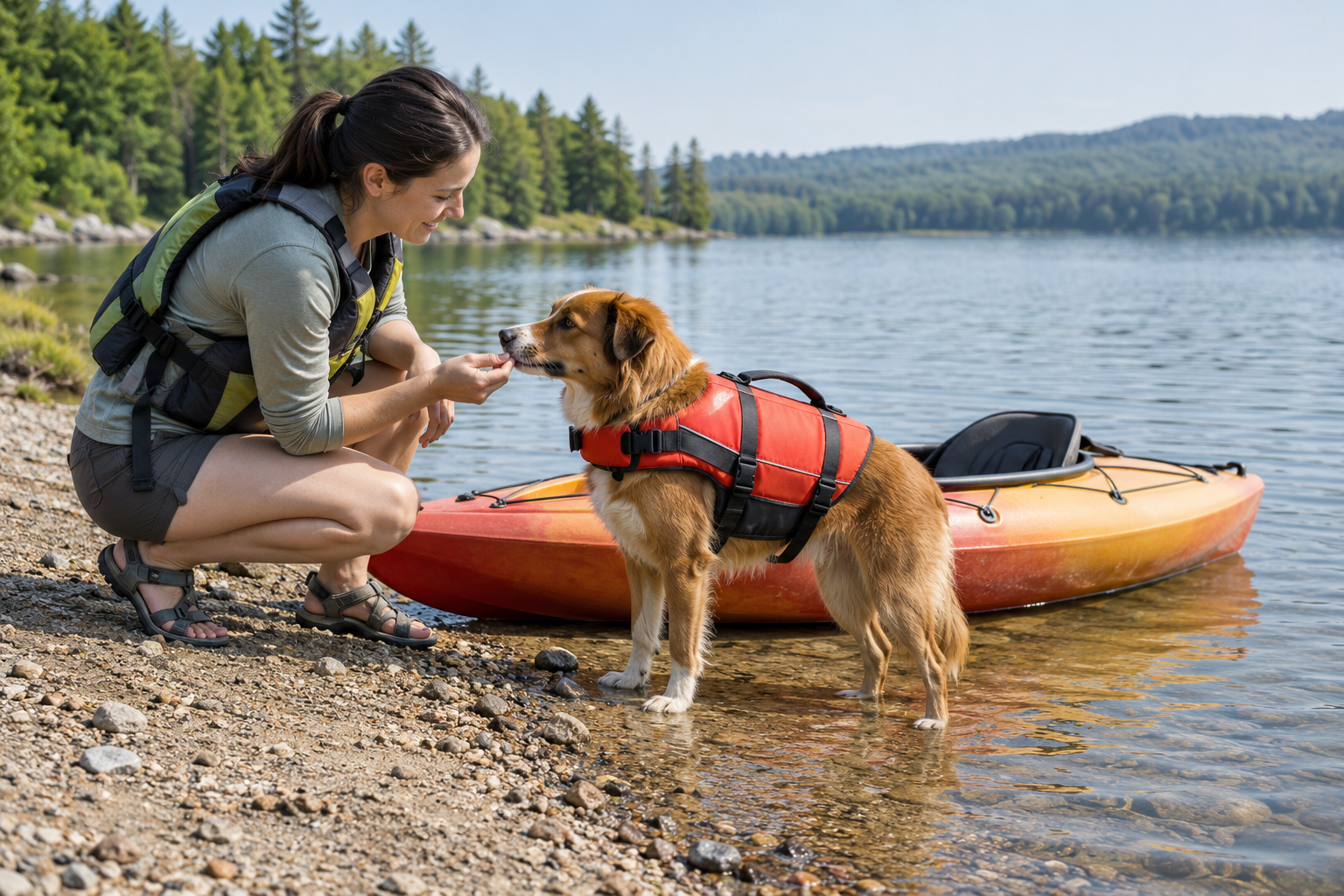 Begin on land or at a calm shoreline, rewarding your dog for relaxed behaviour around the jacket and craft.
- Introduce the jacket at home. Allow your dog to sniff it, reward calm interest and practise wearing it for a few minutes at a time.
- Make the empty craft familiar. Place a kayak or paddleboard on stable ground, or introduce a larger boat while it is docked and still. Reward your dog for approaching, stepping aboard and settling in a designated place.
- Teach an on-board position. A reliable “sit,” “down” or “place” cue reduces sudden movement and helps you keep the craft balanced.
- Practise entry and exit. Rehearse the route your dog will actually use. Large dogs may need a ramp or platform; small dogs may need calm, two-handed assistance.
- Add movement gradually. Start with shallow water and a very short session. Introduce paddling, engine sound and small wakes one element at a time.
The AKC also advises introducing dogs to a kayak on land and building confidence gradually before going onto the water. Read its kayaking preparation guidance for additional training considerations.
Different watercraft need different routines
| Watercraft | Main considerations | Useful preparation |
|---|---|---|
| Motorboat | Slippery decks, engine and propeller areas, heat, wake and greater distance from shore | Create a shaded nonslip resting area, establish a safe boarding route and decide how the engine will be stopped before an overboard recovery |
| Kayak or canoe | Limited space, low sides, gear clutter and balance changes | Give the dog one consistent position, practise launching from shallow water and keep loose equipment secured |
| Paddleboard | Unstable surface, close contact with the paddler and frequent water entry | Teach a steady sit or down, begin in calm shallow water and practise getting back onto the board before travelling farther out |
For every craft, choose conditions that suit the least experienced member of the group. A short, calm first trip is more valuable than a long outing that leaves a dog anxious. Watch for repeated shifting, trembling, tucked posture, excessive panting or attempts to leave the craft. These are signs to return to shore and reassess.
Practise boarding and overboard recovery
Do not wait for an emergency to discover that your dog cannot climb back aboard. Practise close to shore with another adult present where possible.
- Choose a clear recovery point, such as a swim platform, low side or stable boarding ramp.
- Guide the dog alongside the craft before attempting to lift. Avoid pulling by the collar.
- Use the jacket handle for close control and brief assistance while supporting the body with your other hand whenever possible.
- For a large dog, plan a two-person technique or use equipment designed to support their weight.
- On a motorboat, stop the engine and account for the propeller before approaching a dog in the water.
- After recovery, check breathing, movement and temperature, then give the dog time to rest.
If your dog falls into fast-moving, cold or hazardous water, protect human safety first and contact local emergency services when appropriate. Entering dangerous water without the right equipment can turn one emergency into two.
Leashes, tethers and deck hazards
A short leash can be useful during controlled boarding and while walking on shore, but do not tie your dog to a boat, kayak or paddleboard while underway. If the craft overturns, a tether can trap the dog or prevent them from swimming clear. This is also highlighted in the AKC’s boating and kayaking safety advice.
Keep fishing hooks, lines and lures sealed away from curious noses. Remove loose cords that may catch a leg. A nonslip mat can give dogs better footing on fibreglass or smooth board surfaces, while a designated resting area helps keep them away from controls, hot metal and the edge of the deck.
Heat, hydration and water quality
Water does not prevent overheating. Sun reflecting from the surface can increase heat exposure, and decks may become hot enough to hurt paw pads. Provide shade, fresh drinking water and regular rest breaks. Do not rely on lake, river, pool or seawater as a drinking source.
Check local water advisories before allowing your dog to swim. Some harmful algal blooms can produce toxins that are dangerous to animals. The US Environmental Protection Agency’s My Waterway tool is one useful starting point for US waterways; elsewhere, check your local environmental or park authority.
Return to shore if your dog shows unusual weakness, heavy panting that does not settle, vomiting, poor coordination or confusion. Seek veterinary advice promptly if symptoms are severe or follow suspected exposure to contaminated water.
Dog boating checklist
- A correctly fitted dog life jacket
- Fresh water and a stable or collapsible bowl
- A towel and nonslip mat
- A standard leash for boarding and shore stops
- Secure identification with a current phone number
- Waste bags and any prescribed medication
- A pet first-aid kit
- Shade or sun protection appropriate to the craft
- A ramp or boarding aid if your dog needs one
- The location and number of the nearest emergency veterinarian
Common boating mistakes to avoid
- Relying on swimming ability alone. A surprise fall is very different from choosing to enter calm water.
- Using launch day as the first fitting. Introduce and test the jacket before the trip.
- Accepting a loose fit. A shifting jacket can obstruct movement or allow a leg to slip through.
- Lifting a heavy dog only by the handle. Use the handle to guide and assist while supporting the body.
- Tethering the dog to the craft. This may create an entrapment risk during a capsize.
- Leaving without a recovery plan. Know exactly where and how the dog will get back aboard.
- Making the first outing too long. Finish while your dog is still calm and comfortable.
Choosing a Paws Circle life vest for water adventures
Start with the activity, your dog’s body shape and an accurate chest measurement. The Paws Circle dog life vest collection includes buoyant styles with adjustable straps, top handles and high-visibility details for supervised water activities.
For dogs that benefit from additional support toward the front, the Paws Circle ChinGuard Life Vest includes detachable chin support, adjustable neck and belly straps, buoyant body panels, a reinforced top handle and reflective stripe details. Always follow the individual product size chart and perform a supervised shallow-water fit test before boating.
Shop Dog Life VestsIf you are still comparing styles, read How to Choose the Best Dog Life Jacket. For a closer look at who benefits most from flotation, see Do Dogs Need Life Jackets Even If They Can Swim?
Frequently asked questions
Does my dog need a life jacket on a boat?
Yes. A properly fitted dog life jacket is sensible whenever a dog is aboard a boat or small watercraft, including for strong swimmers. It supports flotation after an unexpected fall and makes the dog easier to see and assist.
Can a strong swimmer go boating without a life jacket?
Swimming strength does not remove the risks of fatigue, cold water, wake, current, panic or distance from shore. A life jacket provides an additional margin of safety when conditions change unexpectedly.
Can a dog wear a human life jacket?
No. Human jackets are shaped and secured differently. Use a dog-specific flotation product that supports the torso, allows shoulder movement and remains stable around the neck and chest.
How tight should a dog life jacket be?
It should be snug and stable, with roughly two fingers of space beneath the straps. The jacket should not rotate, ride over the shoulders or restrict breathing and movement. Always check the fit again when wet.
Can I lift my dog using the life jacket handle?
The handle can help guide and briefly assist a dog, but avoid leaving a heavy dog suspended by it. Support the chest and hindquarters whenever possible and practise your recovery method in shallow water.
Should I tether my dog to a kayak or boat?
No. Tying a dog to a watercraft can create an entanglement or entrapment hazard if the craft capsizes. Use a leash for controlled boarding and shore stops, then keep the dog untethered while underway.
How do I introduce my dog to a kayak or paddleboard?
Begin with the craft stable on land. Reward your dog for approaching, stepping on and settling in a designated position. Move to calm, shallow water only when your dog is relaxed, then keep the first session short.
What colour life jacket is easiest to see?
Bright, contrasting colours such as orange, yellow or vivid pink are generally easier to spot on the water. Reflective details can improve visibility in low light, but boating after dark requires additional caution and proper vessel lighting.
A safer day starts before you leave shore
The right dog life jacket is only one part of boating safely. Measure carefully, check the wet fit, introduce the craft gradually and practise how your dog will get back aboard. Add fresh water, shade, rest breaks and a clear emergency plan, and your first trip is far more likely to feel calm rather than improvised.
When your dog is comfortable, the jacket stays secure and the conditions are appropriate, boating can become a rewarding shared adventure. Start close to shore, keep the first outing short and build confidence one trip at a time.
Safety note: Dog life jackets are flotation aids, not rescue devices. No product can guarantee safety or replace active adult supervision. Choose activities suitable for your dog’s health, swimming ability and temperament, and consult your veterinarian if you have concerns about their fitness for boating or swimming.