
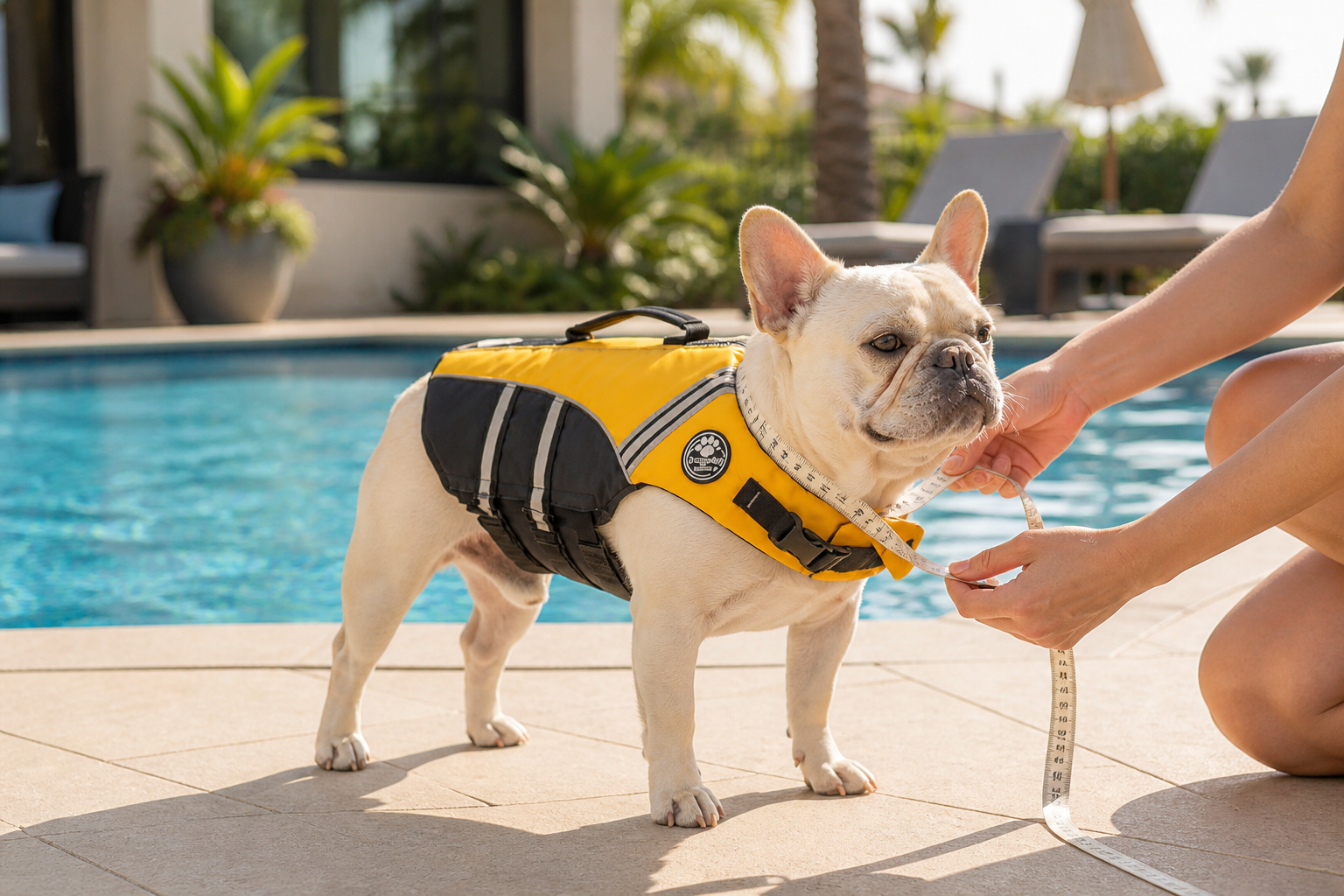
Choosing the right dog life jacket size is not just about picking the closest breed example or matching your dog’s weight. Two dogs can weigh the same and still have completely different chest shapes, neck widths, back lengths, and swim confidence. That is why the best fit starts with measurements, then gets confirmed with a dry-fit check and a short supervised water test.
A dog life jacket should feel secure without restricting natural movement. If it is too loose, it may rotate, ride forward, or leave enough space for a front leg to slip toward the neck opening. If it is too tight, it can press into the throat, limit shoulder movement, or make your dog uncomfortable before they even reach the water.
This guide walks through how to measure your dog for a life jacket, how to read a dog life vest size chart, and how to check the fit before pool days, beach trips, boat rides, or paddleboard sessions.
What You Need Before Measuring
Before you open the size chart, set your dog up for an accurate measurement. A flexible measuring tape works best. If you only have string, wrap the string around your dog, mark the overlap, then measure it flat against a ruler without stretching it.
Measure your dog while they are standing naturally on a flat, non-slip surface. Sitting, lying down, twisting, or being picked up can change the chest and back measurements. If your dog tends to turn around when touched, ask someone to help with treats so you can measure calmly.
Most importantly, use the size chart for the exact life jacket you are buying. Sizing is not universal, even within the same store. A chin-support life vest, a novelty swim vest, and a streamlined flotation jacket may each sit differently on the body.
For Paws Circle life vests, you can shop the full Dog Life Vest Collection and compare the size chart on each product page before ordering.
The Three Measurements That Matter
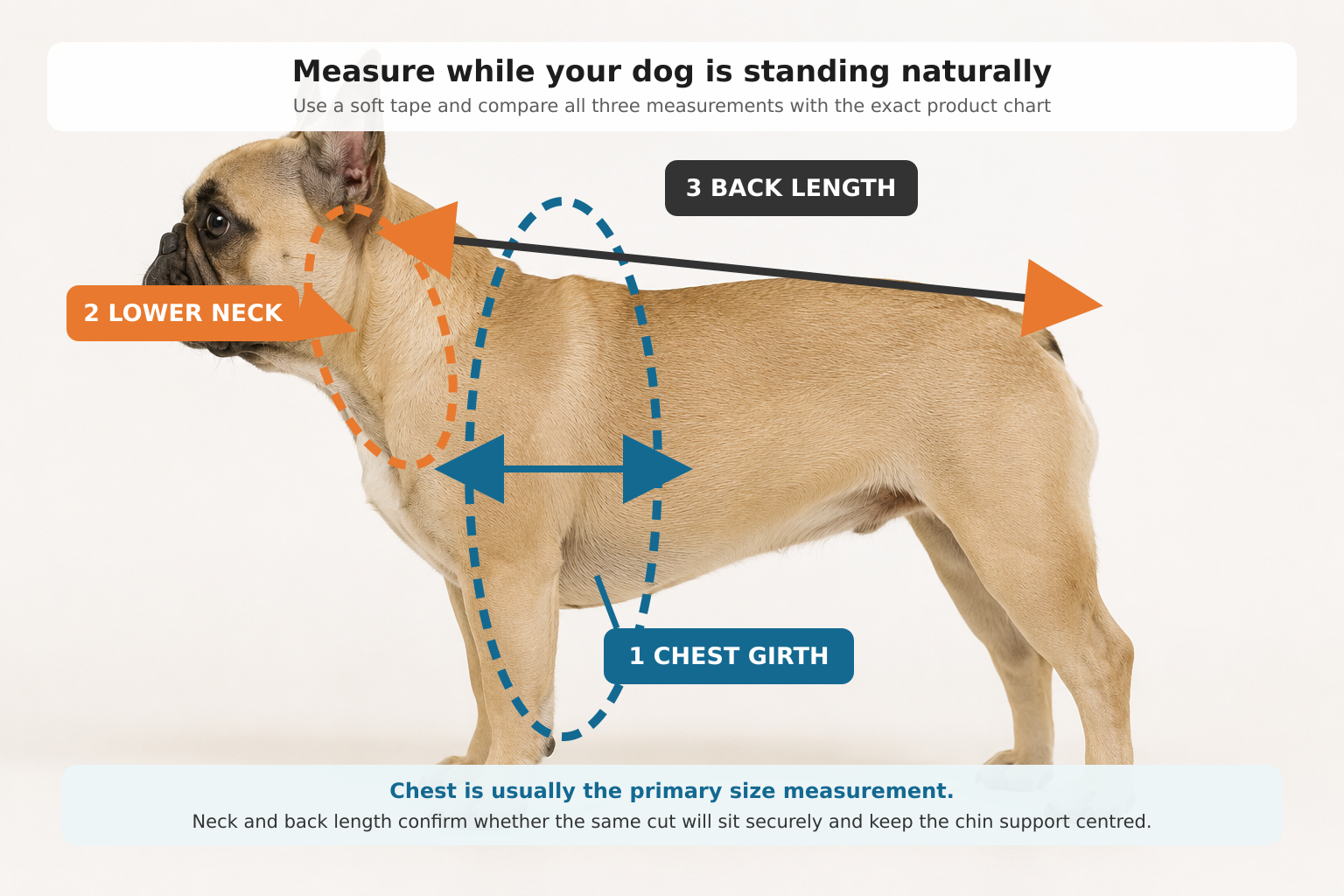
For most dog life jackets, the three key measurements are chest girth, lower neck, and back length. Weight and breed examples can help as a rough guide, but they should not replace actual measurements.
1. Chest Girth: The Main Size Measurement
Chest girth is usually the most important measurement for a dog life jacket. Wrap the tape around the widest part of your dog’s rib cage, usually just behind the front legs. Keep the tape level all the way around and snug against the coat without pulling it tight.
The chest measurement matters because the belly straps and body panels secure the main flotation structure. If the chest fit is wrong, the jacket may shift even if the back length looks correct.
2. Lower Neck: The Security Check
Measure around the base of the neck where the front of the life jacket will sit. This is lower than where a narrow everyday collar may rest. Start near the withers, wrap the tape around the lower neck and upper chest area, and return to the same point.
The neck opening should be secure enough that the vest cannot slide forward, but comfortable enough that your dog can breathe, turn, and paddle naturally. This measurement becomes especially important for styles with chin or head support.
3. Back Length: The Coverage Check
Measure from the base of the neck at the withers to the base of the tail. Back length helps you check whether the life jacket covers the torso without crowding the tail or hind legs.
Back length is usually a coverage check rather than the only deciding measurement. A slightly shorter life vest can still fit correctly if the chest and neck are secure, but a vest that reaches too far back may interfere with movement.
The American Kennel Club also highlights chest, neck, and length as core measurements when choosing dog clothes and gear, and recommends measuring while your dog is standing.
How to Read a Dog Life Jacket Size Chart
Start with chest girth first. Find the size range that includes your dog’s actual chest measurement. Then check the lower neck and back length to make sure the jacket is still suitable for your dog’s shape.
Use breed examples only as a rough starting point. A French Bulldog, Corgi, Dachshund, Pug, or Beagle can vary a lot in chest width and body length. Mixed breeds can vary even more.
Weight is useful supporting information, but it cannot describe body shape. A compact, broad-chested dog and a longer, narrower dog may need different jacket proportions even if their weight is similar.
When comparing Paws Circle styles, check each individual product page. For example, the Paws Circle ChinGuard Life Vest has detachable chin support, while the Paws Circle ChinGuard Flex Life Vest uses a built-in support design. Both are made for water confidence, but you should still compare the exact size chart before changing styles.
How to Put the Life Jacket On
Loosen the adjustment points before putting the jacket on your dog. This makes it easier to position the vest without pulling or twisting it over the body.
Centre the flotation body along your dog’s back so the handle sits over the spine. The front panel should sit low at the base of the neck and upper chest, not high against the throat.
Fasten the belly section and smooth the panels under the chest before tightening. Adjust the straps gradually and evenly on both sides. If you tighten one side fully before the other, the jacket may sit off-centre.
Finally, tuck or secure any loose strap ends so they do not hang down during water play.
The Dry-Fit Check: What a Good Fit Looks Like
Once the life jacket is on, do a dry-fit check before your dog enters the water.
You should generally be able to slide two fingers beneath the straps without forcing them. This is a useful comfort check, but it should not be the only test. Look at the entire fit: the vest should stay centred, the belly section should close securely, and the shoulders should move freely.
Ask your dog to take a few steps, turn, sit if comfortable, and lower their head. The vest should not twist around the body, pull toward one shoulder, or push into the throat.
If your dog is wearing a chin-support style, the support should sit evenly beneath the jaw area. It should not force the head upward on dry land or drift strongly toward one cheek.
How to Fit a Life Jacket With Chin Support
Chin support can be especially helpful for new swimmers, senior dogs, flat-faced breeds, and dogs that tire quickly, but the fit needs to be centred.
Start by placing the body panel straight along the spine. Then settle the front opening at the lower neck and tighten both sides in small, even steps. The chin-support area should meet the underside of the jaw without pushing the face up.
If the chin support keeps moving to one side, stop and reset the jacket. Check for twisted webbing, uneven strap lengths, or a front panel that is not centred. If the support still shifts after the chest fits correctly, the jacket’s neck proportion may not suit your dog. A smaller size could make the chest too tight, so a different cut may be the better choice.
For dogs who need extra head-area support, compare the Patterned ChinGuard Life Vest, ChinGuard Life Vest, and ChinGuard Flex Life Vest.
The Shallow-Water Fit Test
After the dry fit looks correct, introduce the jacket gradually in calm, shallow water where your dog can stand and exit easily. Stay close and keep the first session short.
Let the jacket get wet, then allow your dog to walk before asking for a few calm paddling strokes. Watch from the side. The body should remain reasonably level, the jacket should stay centred, and the front edge should not block the shoulders as the legs paddle forward.
Recheck the straps after the jacket is wet. Fabric and webbing can settle differently once soaked.
The American Red Cross recommends checking life jacket size, strap function, and fit before use, and practicing swimming with the jacket on. The same principle applies to dogs: do the fit check before relying on the jacket for longer water time.
The American Kennel Club also notes that a life jacket can help first-time dog swimmers feel more confident and keep their body level while learning.
Signs the Life Jacket Is Too Loose
- The vest rotates around the body.
- The handle no longer sits over the spine.
- The neck opening gaps when your dog lowers their head.
- A front leg can slide toward or through the neck opening.
- The flotation body rides forward toward the ears or backward toward the tail.
- The chin support moves off-centre even after the vest has been reset.
If you see these signs, pause before entering deeper water. Re-centre the jacket, adjust the straps evenly, and check the product size chart again.
Signs the Life Jacket Is Too Tight
- You cannot place two fingers beneath the straps without forcing them.
- The belly fastening barely closes or closes only under strong tension.
- Straps or edges press into the throat, armpits, or rib cage.
- Your dog takes short steps or cannot extend the front legs naturally.
- Your dog coughs, breathes differently, freezes, or seems distressed.
Remove the jacket immediately if your dog looks uncomfortable or restricted.
What If My Dog Is Between Sizes?
There is no universal “always size up” rule for dog life jackets. The right decision depends on where your dog’s measurements fall.
If the chest is close to the upper limit and the neck also fits the larger size, sizing up may give a better adjustment range. If the chest fits one size but the neck is much smaller, sizing up may create an unsafe gap at the front.
When you are unsure, send Paws Circle your dog’s chest girth, lower-neck measurement, back length, weight, the life vest style you are considering, and a clear standing side photo. You can also refer to the Paws Circle Size Guide or contact us at support@pawscircle.com before ordering.
Quick Fit Checklist
- Chest, lower neck, and back length were measured while standing.
- The exact product size chart was used.
- The belly section closes securely without digging.
- The neck opening is centred and secure.
- Two fingers fit beneath the straps.
- Shoulders and front legs move freely.
- The handle remains centred over the spine.
- Chin support, if present, sits evenly beneath the jaw.
- The vest stayed centred during a supervised shallow-water test.
Ready to Find the Right Fit?
The best dog life jacket size is the one that works across your dog’s whole shape, not just the number beside a breed example. Start with chest girth, confirm lower neck and back length, then test the dry fit before moving into shallow water.
Explore the Paws Circle Dog Life Vest Collection for supportive swim styles including the Turtle Swim Life Vest, Shark Camo Swim Life Vest, Mermaid Fin Life Vest, Clownfish Life Vest, and ChinGuard designs for extra head-area support.
For a broader buying checklist, read our related guide: How to Choose the Best Dog Life Jacket: Fit, Buoyancy and Safety.
Frequently Asked Questions
What is the most important measurement for a dog life jacket?
Chest girth is usually the most important measurement because it determines how the main body and belly straps secure around your dog. Always check lower neck and back length too, especially for chin-support life jackets.
How tight should a dog life jacket be?
A dog life jacket should be snug enough that it does not rotate or pull over the head, but comfortable enough for two fingers to fit under the straps. Your dog should still be able to walk, turn, and paddle naturally.
Should I size up if my dog is between sizes?
Sometimes, but not always. Sizing up can help if the chest is near the upper limit and the neck also fits the larger size. If the neck becomes too loose, choose a different cut or contact Paws Circle for sizing help.
Can I choose a dog life jacket size by breed or weight?
Breed and weight should only be used as rough guides. Dogs of the same breed or weight can have different chest widths, neck shapes, and back lengths, so actual measurements are more reliable.
Why does my dog's life jacket chin support move to one side?
The jacket may be off-centre, the straps may be uneven, or the neck opening may be too loose for your dog’s proportions. Reset the vest, tighten both sides evenly, and check whether a different style would fit better.
Do I need to check the life jacket fit again when it is wet?
Yes. Straps, fabric, and panels can settle once soaked. Recheck centring, neck security, shoulder movement, and strap tension during a calm shallow-water test.