

Choosing winter clothing for a dog is less about picking the warmest-looking piece and more about matching the layer to the dog, the weather and the activity. A fine-coated dog on a dry evening walk has different needs from a thick-coated dog waiting beside a windy football field—and neither situation is the same as a rainy woodland outing.
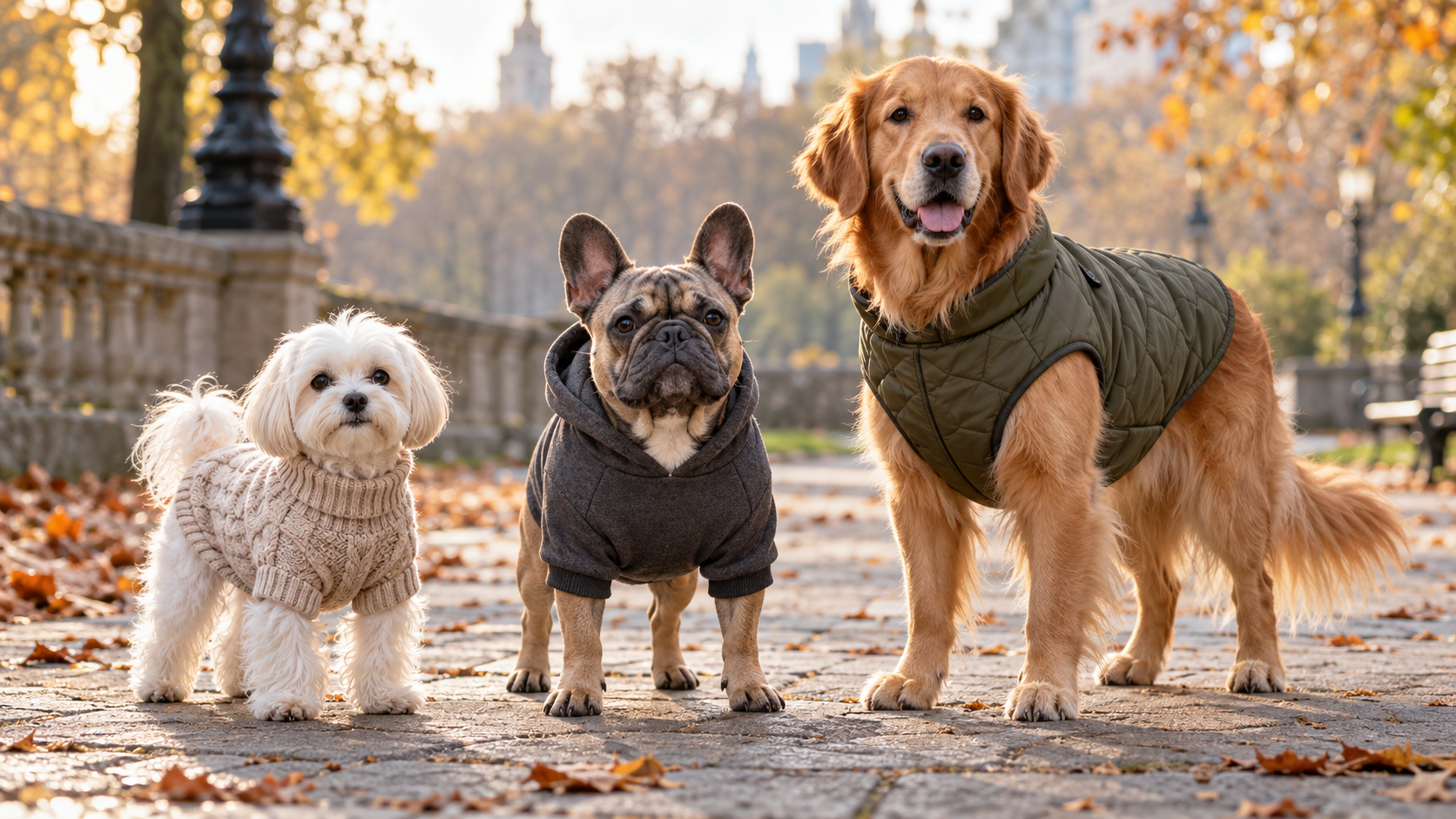
A sweater, hoodie and jacket each serve a different purpose. Start with your dog’s comfort, then consider the conditions outside.
Dog sweater vs hoodie vs jacket: a quick comparison
| Layer | Best for | Main advantage | Limit to remember |
|---|---|---|---|
| Sweater | Indoors, dry cool days, short walks | Soft, flexible warmth without much bulk | Knit fabric may absorb rain and block little wind |
| Hoodie | Everyday wear, mild-to-cool weather, relaxed outings | Comfortable midweight coverage with a casual fit | A hood must not obstruct hearing, sight or movement |
| Jacket | Wind, rain, snow, colder or longer outdoor trips | Purpose-built protection; may be water-resistant, wind-resistant or insulated | Too much insulation can cause overheating in active or thick-coated dogs |
These are useful starting points, not rigid rules. Fabrics and construction vary. A light windbreaker may provide less warmth than a fleece hoodie, while an insulated coat may be considerably warmer than either. Check the actual material, coverage and lining rather than relying on the product name alone.
Does every dog need winter clothing?
No. Many healthy dogs with dense double coats are comfortable in conditions that make people reach for another layer. Others lose heat quickly and may appreciate clothing before the temperature feels especially cold to us. The American Veterinary Medical Association notes that short-coated and cold-sensitive dogs may benefit from a sweater or coat outdoors.
Consider the whole dog, not only the breed name:
- Coat type: fine, short or sparse coats usually provide less natural insulation than dense undercoats.
- Body size and build: small, lean and low-body-fat dogs often lose heat faster.
- Age: puppies and senior dogs may regulate temperature less efficiently.
- Health: arthritis, reduced mobility and some medical conditions can change cold tolerance. Ask your veterinarian if you are unsure.
- Acclimation: a dog accustomed to a warm climate may feel the cold sooner than one gradually adapted to winter.
- Activity: a brisk walk generates more body heat than standing still or riding in a stroller.
- Conditions: dampness and wind can make a moderate temperature feel much colder.
Watch the individual in front of you. Shivering, lifting paws, slowing down, hunching, seeking shelter or repeatedly trying to turn home are more useful clues than a generic temperature chart.
When a dog sweater is the right choice
A sweater is the simplest option for adding gentle warmth without the structure of an outdoor coat. Knits and soft fleece fabrics tend to move comfortably with the body, making them helpful for indoor use, car journeys, café visits and short walks in dry weather.
A sweater works well when:
- your home feels chilly to a short-coated or senior dog;
- the day is cool but calm and dry;
- your dog needs light warmth without a stiff outer shell;
- you want an easy layer for a brief toilet break or relaxed walk.
Its main weakness is weather resistance. Once a knit becomes wet, it can hold moisture against the body and make a dog colder. It also offers limited protection from a biting wind. If the forecast turns damp or gusty, change to a weather-appropriate jacket or bring a dry replacement. The American Kennel Club similarly describes sweaters as useful for warmth while noting that a coat may be better for harsher outdoor conditions.
When to choose a dog hoodie
A hoodie sits between a sweater and a jacket. It usually provides soft, midweight coverage for everyday wear, making it a practical choice for cool autumn days, mild winter weather and dogs that prefer a less structured garment. Sweatshirt fabric may also be easier to wash than delicate knitwear.
Choose a design with a hood that rests naturally behind the neck. It should not fall over the eyes, press the ears forward or interfere with a collar, harness or lead. Avoid dangling cords, loose embellishments and anything a dog could chew or catch. Clothing should be removed when a dog is unsupervised.
A hoodie is a good middle ground when:
- a sweater feels too delicate for daily use;
- a full coat would be unnecessarily warm;
- your dog needs comfortable coverage for errands, social outings or a calm walk;
- the weather is cool and mostly dry.
For dogs that enjoy casual, flexible layers, browse Paws Circle’s dog hoodies and sweaters for examples of different weights and fits.
When a dog jacket is the better option
A jacket earns its place when conditions become more demanding. Unlike a soft indoor layer, an outer coat can be designed to reduce wind chill, shed light rain or provide insulation. The right choice depends on what you need it to do.
- Lightweight jacket or windbreaker: useful for breezy, changeable days and active walks.
- Rain jacket: useful in wet climates, especially for dogs whose coats take a long time to dry.
- Insulated jacket: suited to colder weather, snow and dogs with limited natural insulation.
- High-coverage coat: useful when extra chest and belly protection is needed, provided movement and toileting remain unrestricted.
The AKC’s winter coat guidance recommends matching construction to conditions: lighter jackets for cool weather, insulated options for snow or more severe cold, and rain protection for wet climates.
A coat should not be so heavy that your dog overheats during exercise. Thick-coated breeds and energetic dogs may need only wind or rain protection, if anything. Pause during a longer outing to check for heavy panting, unusual slowing or excessive warmth under the garment.
Choose the layer by weather and activity
| Situation | Likely starting point | What to check |
|---|---|---|
| Chilly home or calm, dry day | Light sweater | Your dog remains relaxed and does not pant indoors |
| Cool neighbourhood walk | Sweater or hoodie | Fabric allows a full stride and stays dry |
| Windy day | Wind-resistant jacket | Chest coverage, secure fastenings and no flapping fabric |
| Light rain | Water-resistant jacket | Dry underlayer and comfortable belly clearance |
| Snow or prolonged cold | Insulated jacket | Warmth without bulk at shoulders or armpits |
| High-energy run or hike | Light, breathable protection—or none | Frequent overheating checks |
| Waiting outdoors with little movement | Warmer layer than for an active walk | Shivering, tucked posture or cold ears and body |
If you need a practical outer layer, Paws Circle’s jackets and windbreakers and curated Outdoor Edit offer useful reference points without assuming every dog needs the same level of insulation.
Can dogs wear a sweater under a jacket?
Yes, provided both layers still fit properly together. A thin base layer under a roomier weatherproof shell can work well for a fine-coated dog in cold, wet conditions. However, layering is not automatically better. Two bulky garments can tighten around the chest and armpits, compress insulating material and restrict the shoulders.
How should a dog sweater, hoodie or jacket fit?
A good fit is close enough to stay in place but never tight enough to alter breathing or movement. Measure the chest at its widest point, the neck where the garment will sit and the back from the base of the neck to the base of the tail. Weight and breed can help, but chest girth is usually the most reliable starting measurement.
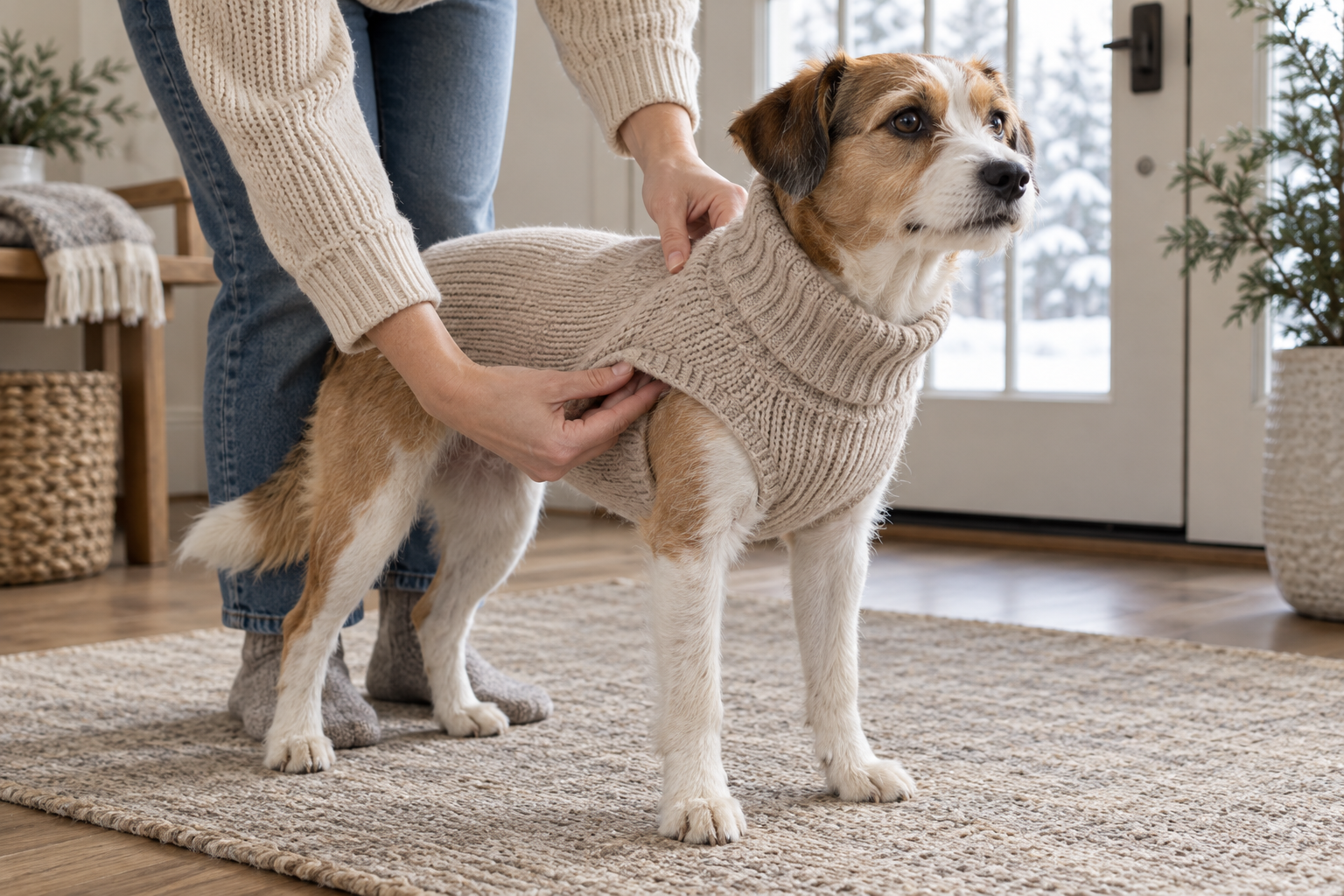
Check the chest and shoulder area while your dog is standing naturally, then repeat the check during movement.
- Two-finger check: you should be able to slide two fingers comfortably beneath the neck and chest openings.
- Movement check: watch your dog walk, sit, turn, lie down and step over a low threshold.
- Friction check: feel around the armpits, shoulders, neck and fastenings for rubbing or pinching.
- Length check: the garment should cover the intended area without pressing the tail or restricting toileting.
- Ten-minute recheck: after a short supervised wear, look for red marks, dampness, bunching or a change in behaviour.
The VCA Animal Hospitals advises that a jacket should cover the back and appropriate chest or belly area while still permitting free movement—and should be neither tight nor loose. For step-by-step measuring help, use the Paws Circle dog clothing size guide before ordering.
Signs the layer is not working
Remove or adjust the garment if your dog:
- pants heavily when the weather and activity do not explain it;
- moves stiffly, shortens the stride or refuses to walk;
- repeatedly scratches, rolls, freezes or bites at the fabric;
- develops redness, flattened fur or chafing at the neck, chest or armpits;
- has a hood, collar or neckline interfering with sight, hearing or breathing;
- becomes wet beneath the garment.
Clothing cannot replace sensible limits. Keep winter outings appropriate to the conditions, provide access to shelter and fresh water, and remove wet garments promptly. For more seasonal precautions, see our guide to protecting your dog in cold weather.
Help your dog become comfortable with clothing
Some dogs accept a new layer immediately; others need a slower introduction. Let your dog investigate the garment, reward calm interest, then briefly touch it to the shoulders before putting it on. Begin with a few seconds, pair the experience with treats or play, and gradually increase the time. Practise indoors before relying on the item during a cold outing.
Never force a struggling dog into tight openings. A design with straightforward fastenings may be easier for a clothing-sensitive dog than one pulled over the head. The AKC’s training guidance also recommends building positive associations and increasing wear time gradually.
Common mistakes to avoid
- Buying by breed alone. Dogs of the same breed can have very different chest and back measurements.
- Choosing appearance before purpose. Start with weather protection and fit; colour and style come next.
- Leaving wet knitwear on. Damp fabric can chill rather than warm.
- Overdressing an active dog. Movement creates heat, even on a cold day.
- Ignoring harness compatibility. Check that the lead attachment is accessible and no fabric twists beneath the harness.
- Skipping supervision. Remove clothing if your dog is crated or left alone, especially if it has a hood, fastenings or decorations.
Build a useful cold-weather wardrobe
You do not need a large collection—just layers that suit the weather your dog actually experiences. A soft everyday piece and a protective outer layer are enough for many dogs. Measure first, observe your dog closely and choose comfort over unnecessary bulk.
Explore hoodies & sweatersBrowse jackets & windbreakersFrequently asked questions
Is a dog sweater warmer than a hoodie?
Not necessarily. Warmth depends on fibre, thickness, lining, coverage and fit. A dense wool-blend sweater may be warmer than a light cotton hoodie, while a fleece-lined hoodie may outperform a loose decorative knit.
Is a dog jacket better than a sweater?
A jacket is usually better for wind, rain, snow and longer outdoor exposure. A sweater may be more comfortable for gentle warmth indoors or in calm, dry weather. The better option is the one that matches the conditions.
What temperature does a dog need a sweater?
There is no single temperature for every dog. Coat, size, age, health, activity, wind and moisture all matter. Watch for shivering, slowing down, paw lifting or seeking shelter, and ask your veterinarian about a dog with medical needs.
Can a dog wear a hoodie indoors?
Yes, if the room is cool and the dog is comfortable. Remove it if your dog pants, feels hot beneath the fabric or cannot settle, and do not leave hooded clothing on an unsupervised dog.
Can my dog wear a sweater under a raincoat?
Yes, if the raincoat has enough room and both garments pass the movement and two-finger checks. Use a thin, dry base layer and remove both promptly if moisture gets underneath.
Should a dog jacket cover the belly?
Some chest and belly coverage can retain warmth and reduce splash, but the cut must permit a natural stride and clean toileting. Male dogs often need additional underside clearance.
How long can a dog wear winter clothing?
Use clothing for as long as the conditions require, with regular comfort checks. Remove it indoors once the dog is warm, when it becomes wet, or whenever you cannot supervise safely.
How do I know if a dog coat is too small?
Warning signs include difficult fastenings, pressure at the neck or chest, rubbing behind the front legs, shortened steps, bunching and inability to sit or lie down normally. Re-measure rather than assuming the fabric will stretch.
Safety note: This guide offers general clothing and cold-weather information, not veterinary advice. A dog with arthritis, heart or respiratory disease, skin problems or unusual sensitivity to temperature should be assessed by a veterinarian.