

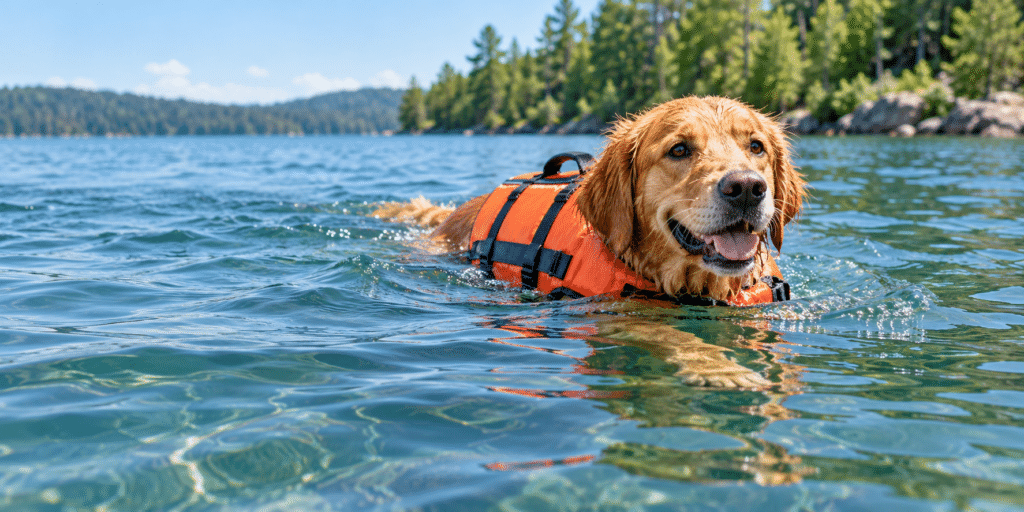
Yes, dogs can need life jackets even when they swim well. Swimming ability lowers one part of the risk, but it does not prevent fatigue, control currents, keep a dog warm or guarantee an easy route out of the water. A fitted life jacket is most important on boats and paddleboards, in open water, and whenever a dog is young, older, inexperienced or likely to tire quickly.
That does not mean every healthy dog must wear one for every brief paddle in a shallow, controlled pool. The sensible decision depends on the dog, the water, the activity and how quickly you could help if something changed. This guide explains those factors so owners can make a practical choice.
Can Dogs Swim Naturally?
Many dogs will paddle when they enter water, but paddling is not the same as swimming efficiently or safely. Body shape, confidence, fitness and previous experience all affect how well a dog stays level and moves toward an exit. Some dogs enjoy water immediately. Others become tense, hold the front of the body too high or splash without making useful progress.
A dog that swims strongly in a familiar pool may struggle in colder water, waves or a current. Puppies and senior dogs often have less stamina. Stocky, short-legged and short-muzzled dogs may work harder to keep their head comfortably above the surface. Lean dogs with little body fat can also be less buoyant. Breed offers clues, but the individual dog matters more than the label.
Why Strong Swimmers Still Face Risk
Fatigue Can Arrive Quickly
Swimming is continuous exercise. A dog cannot pause in deep water as easily as on land, and excitement can hide early tiredness. Repeated retrieves, chasing another dog or trying to keep pace with a paddleboard can extend a session beyond the dog’s normal conditioning. Flotation helps conserve energy and gives the dog more support while you guide them to an exit.
Currents and Waves Change the Workload
Moving water can make a short return route much harder. A current may carry the dog away from the closest bank, while waves can interrupt breathing and direction. Even a dog that swims well in calm water may become tired or confused when the surface keeps changing. The American Kennel Club notes that strong currents can exhaust dogs and recommends flotation as an added safety layer.
Cold Water Reduces the Margin for Error
Cold water can make a swim more demanding, particularly for small dogs, lean dogs, puppies and seniors. Conditions near the shore do not always reflect deeper water. Keep sessions short, watch for shivering or slowing movement and leave the water early. A life jacket adds buoyancy, but it does not prevent cold exposure.
Unexpected Falls Cause Stress and Disorientation
A dog that chooses to enter from a beach is prepared for the water. A dog that slips from a dock or falls from a boat may be startled, turn in the wrong direction or spend energy trying to locate you. Immediate flotation keeps the dog supported while you move into position to help.
Visibility Matters in Open Water
A wet dog can be difficult to see against dark water, glare or a busy shoreline. Bright fabric and reflective details make it easier to track the dog’s position. Visibility does not replace supervision, but it can shorten the time it takes to notice that a dog is drifting or tiring.
Some Dogs Cannot Find or Use the Exit
Pools with high edges, steep lake banks and slippery boat ladders can trap a dog that would otherwise swim back safely. Teach the exit before allowing free swimming. Walk the dog to the pool steps or ramp from different starting points and repeat until the route is familiar. In natural water, choose a gently sloping entry and stay close to it.
When a Life Jacket Is Strongly Recommended
| Situation | Why flotation helps | What owners should do |
|---|---|---|
| Boat, kayak or paddleboard | Supports a dog after an unexpected fall and provides a handle for assistance | Fit the jacket before boarding and practise helping the dog back aboard |
| Lake, river or sea | Adds buoyancy and visibility when depth, current, temperature and waves can change | Check conditions, choose an easy exit and keep the dog within immediate reach |
| First swimming sessions | Helps an inexperienced dog stay supported while learning a calm body position | Begin in warm, shallow water and let the dog progress without force |
| Puppies and senior dogs | Compensates for lower stamina or reduced strength | Use short sessions with frequent rest and watch closely for tiredness |
| Dogs with challenging body shapes | Can support dogs that work harder to keep the head and body level | Choose balanced flotation and confirm that the shoulders remain free |
| Low light or busy water | Bright colour makes the dog easier to track | Treat visibility as backup, not permission to let the dog range farther |
Boats, Kayaks and Paddleboards
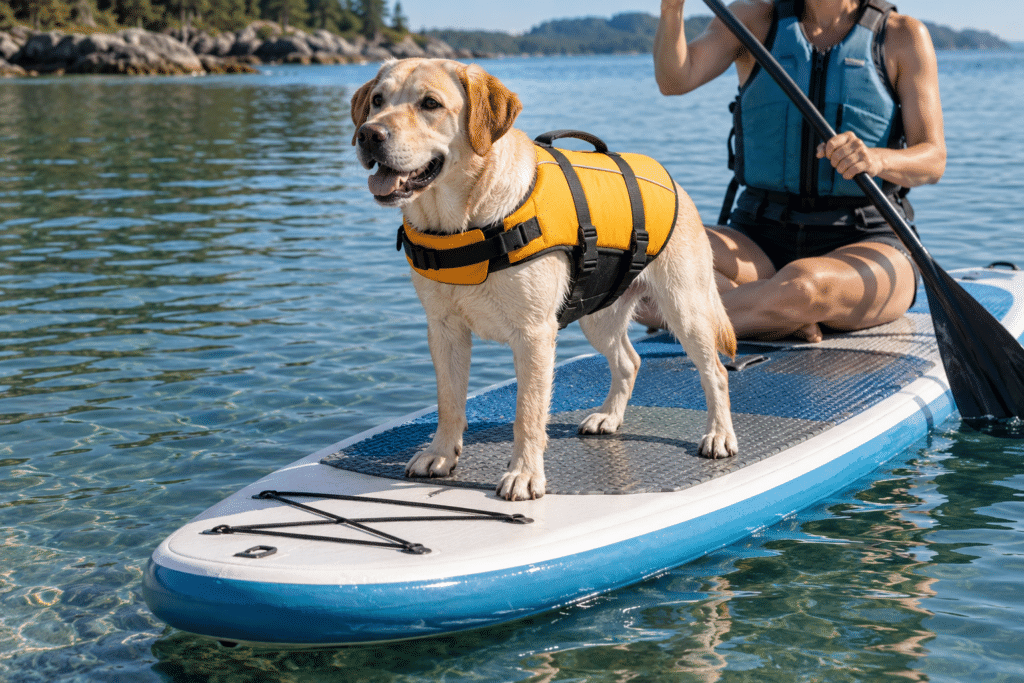
A dog should wear a life jacket on a boat, kayak or paddleboard even if they swim regularly. A sudden fall may leave the dog tired, startled or separated from an easy entry point. The jacket should have a secure top handle that you can reach without pulling on the neck. Practise your recovery plan close to shore before a longer outing.
Do not attach a dog to a watercraft with a long tether that could trap or entangle them if the craft overturns. Keep the deck clear, provide fresh drinking water and plan rest breaks away from direct sun. The American Kennel Club’s boating and kayaking guidance recommends life jackets for strong swimmers on watercraft because accidents can be disorienting and exhausting.
What About a Familiar Swimming Pool?
A healthy adult dog that swims comfortably in a shallow, enclosed pool may not need to wear a life jacket for every short supervised session. The owner should remain within reach, the water should be calm and the dog should know exactly how to leave. A jacket becomes more useful when the pool is deep, the edges are high, the dog is learning, or the session includes repeated swimming.
Pool familiarity can create false confidence. Dogs may enter when no one is watching or swim toward the wrong edge after becoming tired. Use a secure pool barrier when the area is unattended. Mark the exit visually if possible, rehearse it often and stop before the dog is exhausted.
Dogs That May Need More Support
The following dogs often benefit from a life jacket sooner, even in calm water:
- Puppies that are still learning coordination and confidence in water
- Senior dogs with reduced strength, stamina, vision or balance
- Short-muzzled dogs that may find it harder to keep the face clear of the water
- Stocky or short-legged dogs that must work harder to maintain a level swimming position
- Very lean dogs with less natural buoyancy
- Dogs returning to activity after illness, injury or a long period without swimming
- Anxious dogs that become tense or panic when their feet leave the bottom
A veterinarian should advise whether swimming is suitable when a dog has breathing, heart, joint, neurological or mobility problems. Flotation can support the body, but it cannot make an unsuitable activity safe.
What a Life Jacket Can—and Cannot—Do
A correctly fitted dog life jacket adds buoyancy, improves visibility and gives you a handle for close assistance. It may help the dog conserve energy and maintain a steadier position. It does not guarantee that the head will remain clear in every situation, prevent hypothermia, remove hazards from the water or replace an attentive owner.
Stay close enough to intervene. Check conditions before entering. Avoid strong currents, rough surf, blue-green algae warnings, fishing lines and areas where a dog cannot climb out. Bring fresh water and schedule breaks. If the dog appears frightened, weak, uncoordinated or unusually breathless, end the session. See the VCA Animal Hospitals dog water-safety guidance for additional veterinary advice.
Choosing and Fitting the Jacket
Choose the size from your dog’s measurements rather than breed alone. Chest girth is usually the primary measurement, followed by the lower neck and back length. The jacket should stay centred, allow the front legs to move freely and remain secure when wet. You should generally be able to place two fingers beneath the straps without the jacket rotating around the body.
Paws Circle options: Explore the Dog Life Vest Collection or see the Paws Circle ChinGuard Life Vest.
Related Paws Circle guides: Read How to Choose the Best Dog Life Jacket and the Dog Life Jacket Size Guide.
A Practical Decision Checklist
Use a life jacket if any answer below is yes:
- Will the dog be on a boat, kayak, canoe, raft or paddleboard?
- Is the water deep, moving, cold, unfamiliar or difficult to exit?
- Is the dog young, older, inexperienced, anxious or easily tired?
- Does the dog have a body shape that makes swimming more demanding?
- Will visibility be reduced by distance, glare, low light or other activity?
- Would it take more than a few seconds for you to reach and support the dog?
If every answer is no, the setting may be suitable for a brief, closely supervised swim without flotation. Supervision, controlled access and a known exit are still required.
The Safest Answer for Strong Swimmers
Strong swimming is useful, but it should not carry the entire safety plan. Use a fitted life jacket whenever conditions could make the swim longer, colder or less predictable than expected. On watercraft and in open water, the added flotation and visibility are worth having before an accident occurs.
Frequently Asked Questions
Do all dogs need a life jacket?
No. The need depends on the dog and the setting. Life jackets are strongly recommended on watercraft, in open water and for dogs that are learning, older or likely to tire quickly.
Does a Labrador need a life jacket?
A fit adult Labrador may be a strong swimmer, but should still wear a life jacket on boats, paddleboards and in open water where fatigue, distance or changing conditions can create risk.
Can a dog swim without a life jacket in a pool?
A capable dog may swim without one in a controlled pool when an adult remains within reach and the dog knows the exit. Use flotation when the dog is learning, the pool is deep or the session will be longer.
Should dogs wear life jackets at the beach?
Yes when they enter the sea. Waves, tides and currents can challenge strong swimmers, and bright flotation makes the dog easier to see.
Should a dog wear a life jacket on a boat?
Yes. An unexpected fall can leave a dog disoriented or far from an easy exit. The jacket should fit securely and include a strong handle for assistance.
Can a life jacket replace supervision?
No. It is a flotation aid. Stay close, watch the dog continuously and end the activity before tiredness or stress develops.
How long can a dog swim in a life jacket?
There is no safe universal time. Fitness, age, water temperature and conditions all matter. Begin with short sessions, provide rest and stop while the dog is still moving comfortably.
Safety note: This article provides general guidance and does not replace advice from your veterinarian or local water-safety authorities.