

How to Find the Right Size for Dog Clothing
Finding the perfect fit for your dog’s outfit is key to both comfort and style. Whether you’re shopping for everyday wear or statement pieces, the right size ensures your pet can move freely while looking their best.
1. Measure Your Dog Correctly
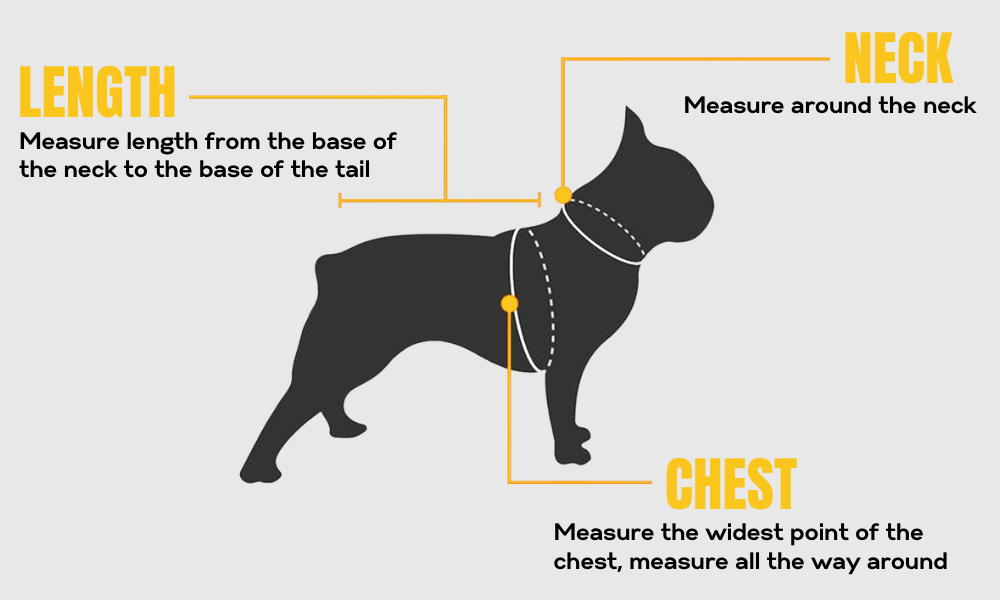
To choose the right dog clothing size, start by measuring your dog in three key areas:
-
Chest (Most Important)
Measure around the widest part of your dog’s chest, just behind the front legs.
*This is the most important measurement when selecting clothing. -
Back Length
Measure from the base of the neck (where the collar sits) to the base of the tail. -
Neck
Measure around the neck where a collar would naturally rest.
Important Tips:
- Do not measure too tightly and allow a little room for comfort and movement
- If you prefer a looser fit or your dog is still growing, add extra space
- If you measure snug, choose a slightly larger size for a better fit
2. Refer to the Size Chart on Each Product Page
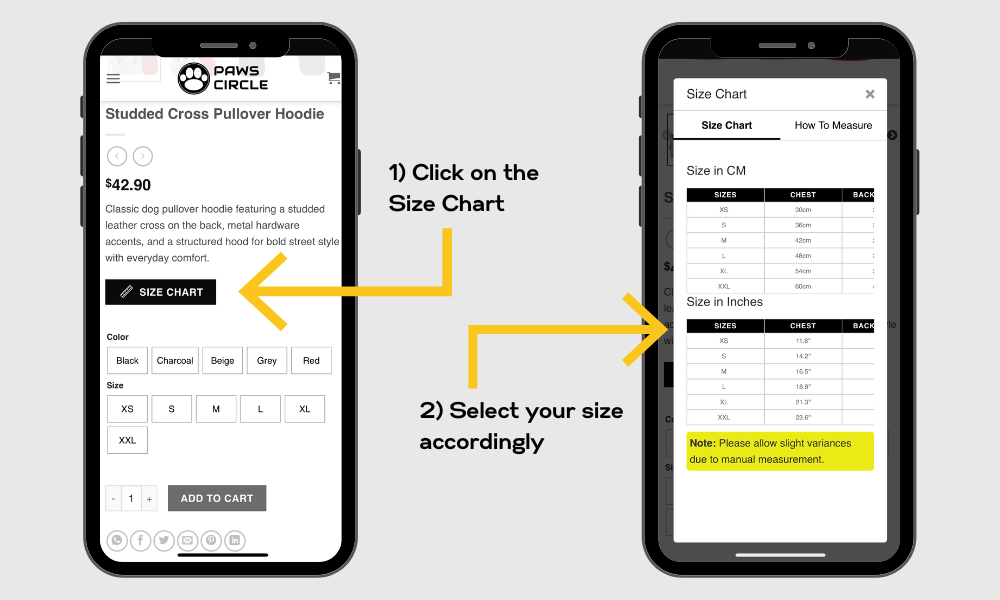
Every product has its own unique sizing, so always refer to the size chart provided on the specific product page before purchasing.
-
Prioritize the chest measurement when selecting clothing sizes
-
If your dog falls between sizes, we recommend choosing the larger size for comfort
-
Different styles (e.g. hoodies, dresses, harness outfits) may fit differently
3. Consider Fit & Comfort Preferences
Every dog is different — some prefer a snug fit, while others need more room to move.
When deciding how much extra space to allow:
- Add 1–3 cm (0.5–1 inch) for a fitted look
- Add 3–5 cm (1–2 inches) for a more relaxed, comfortable fit
- For thick fur breeds, always allow extra room
4. Sizing for Accessories
Sizing isn’t just for clothing — accessories require different measurements:
- Hats & Caps: Measure head circumference
- Shoes: Measure paw length and width
Each product will include specific measurement instructions — be sure to follow them carefully.
5. Still Unsure? We’re Here to Help
If you’re unsure about sizing, feel free to contact us before placing your order.
We’re happy to help you find the best fit for your pet.
Average Dog Breed Size Guide (Optional Reference)
If measuring your dog isn’t possible, you may use the average breed measurements below as a general guide. However, individual dogs may vary, so actual measurements are always recommended for the best fit.
| Breed | Chest (Inch) | Chest (CM) | Neck (Inch) | Neck (CM) |
|---|---|---|---|---|
| American Cocker Spaniel | 20–24 | 50–60 | 12–18 | 30–45 |
| Australian Shepherd | 22–28 | 55–70 | 16–22 | 40–55 |
| Basenji | 16–22 | 40–55 | 10–14 | 25–35 |
| Beagle | 18–24 | 45–60 | 12–18 | 30–45 |
| Bichon Frise | 16–20 | 40–50 | 12–16 | 30–40 |
| Border Collie | 22–26 | 55–65 | 14–18 | 35–45 |
| Boston Terrier | 16–20 | 40–50 | 12–16 | 30–40 |
| Cairn Terrier | 16–20 | 40–50 | 10–14 | 25–35 |
| Cavalier King Charles Spaniel | 16–20 | 40–50 | 12–16 | 30–40 |
| Chihuahua | 12–16 | 30–40 | 8–12 | 20–30 |
| Cocker Spaniel | 20–24 | 50–60 | 12–18 | 30–45 |
| Corgi | 18–22 | 45–55 | 14–16 | 35–40 |
| Dachshund (Mini) | 12–18 | 30–45 | 8–12 | 20–30 |
| Dachshund (Standard) | 20–24 | 50–60 | 12–16 | 30–40 |
| French Bulldog | 20–26 | 50–66 | 12–16 | 30–40 |
| Italian Greyhound | 12–18 | 30–45 | 8–12 | 20–30 |
| Jack Russell Terrier | 16–22 | 40–55 | 10–14 | 25–35 |
| Maltese | 12–16 | 30–40 | 9–13 | 23–33 |
| Mini Goldendoodle | 20–28 | 50–70 | 14–20 | 35–50 |
| Miniature Pinscher | 12–18 | 30–45 | 10–14 | 25–35 |
| Miniature Schnauzer | 18–22 | 45–55 | 12–16 | 30–40 |
| Papillon | 12–16 | 30–40 | 9–13 | 23–33 |
| Pekingese | 16–20 | 40–50 | 10–14 | 25–35 |
| Pomeranian | 12–16 | 30–40 | 9–13 | 23–33 |
| Pug | 18–24 | 45–60 | 12–16 | 30–40 |
| Scottish Terrier | 16–20 | 40–50 | 10–14 | 25–35 |
| Shetland Sheepdog | 20–24 | 50–60 | 12–16 | 30–40 |
| Shih Tzu | 16–20 | 40–50 | 10–14 | 25–35 |
| Toy Poodle | 12–16 | 30–40 | 9–13 | 23–33 |
| West Highland Terrier | 16–22 | 40–55 | 12–16 | 30–40 |
| Whippet | 18–24 | 45–60 | 13–15 | 33–38 |
| Yorkshire Terrier | 12–16 | 30–40 | 8–12 | 20–30 |